MondayVatican
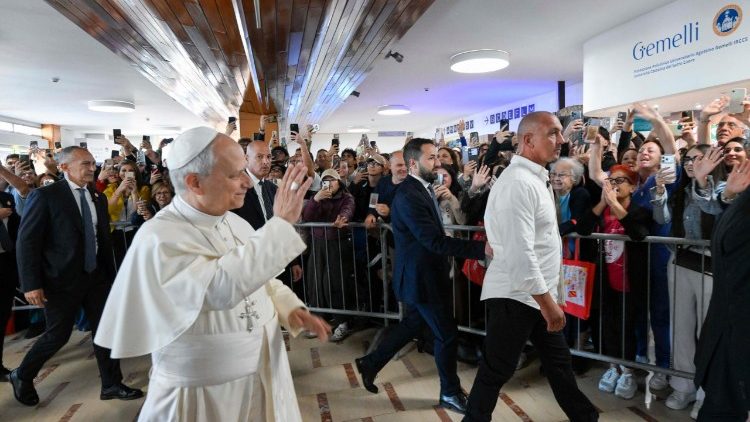 Until the announcement of his hospitalization and lung surgery that led to the diagnosis of adenocarcinoma last week, it appeared to all the world that Leo XIV’s would be a broad-ranging pontificate spanning the better part of two decades, in which the pontiff would have the opportunity to reshape and even redefine the Roman Curia, the bishops, and the cardinals.
It’s true that the Pope had already proven himself a great temporizer: No major reforms, no spoils system, only a few precise adjustments on some issues (technicalities of financial reform, the Vatican City State law), continuity on others (synodality and the synodal method applied to consistories, women heads of dicasteries), and even fewer high-profile appointments.
Until his hospitalization, Leo XIV’s pontificate was poised to blossom.
It also opened in the midst of a Jubilee, something that had happened only once before in history, and with the need to bring peace and unity to a Curia and a Church divided after a divisive pontificate like Pope Francis’s.
Leo XIV addressed the problem by fulfilling all of Francis’s commitments until the Jubilee, convening the first consistory the day after the Jubilee ended, and then beginning the transition—slowly, to be honest—in the second half of his pontificate. The Pope even published in his own name a document prepared by Pope Francis, the apostolic exhortation Dilexi Te. Leo’s hospitalization came while celebrating the tenth anniversary of another divisive move by his immediate predecessor, the apostolic exhortation Amoris Laetitia.
This week’s bishops’ meeting on Amoris Laetitia had already taken on the tone of a sociological discussion on the family. In his inaugural address on October 7, Leo XIV had already called for a courageous response to present challenges and a renewed focus on the family. The letter convening the March 19 meeting emphasized the need to consider the profound changes that have affected family life.
In short, with Leo XIV we face neither a Pope who breaks with the Church’s tradition nor one who, in the name of continuity, accepts controversial interpretations that made their way in the previous pontificate.
If the meeting on Amoris Laetitia was considered a watershed moment, we must understand how this illness affects the pontificate.
Pressed by journalists’ questions, Cardinal Pietro Parolin, Vatican Secretary of State, went so far as to say on October 15 that the pontificate could be “reshaped.” – and he later claimed he was mostly referring to the upcoming trip to Argentina, Peru, Uruguay, that is still on. Now, faced with illness and convalescence, it’s entirely normal to decide to change one’s lifestyle and schedule. Cardinal Parolin was likely referring to this.
No matter.
To say what the cardinal secretary of state said while the Pope was still in hospital could not fail to spark debate and raise questions.
Parolin was borderline superficial in responding to journalists this way, underestimating how each word could be interpreted, unless he intended it to be interpreted precisely that way.
What could it mean, then, to reshape the pontificate?
It could mean slowing down. Slowing down decisions, slowing down hearings, slowing down travel plans, to calmly monitor the progress of his illness and prepare for recovery. After all, Leo XIV has shown he is strictly following the doctors’ advice, which undoubtedly recommends rest.
Rescheduling also means possibly changing his travel plans to Argentina, Uruguay, and Peru, scheduled for November 6-17, which would take him through three countries and 14 locations and involve about twenty flights by plane and helicopter, with a stop in Cuzco, over 3,000 meters above sea level.
Perhaps a bit too much for a tired body still recovering from the removal of a lung lobe. Typically, after such a procedure, one prefers not to fly. But even if one does fly, making 20 flights in seven days could be daunting.
Then the travel schedule might change, or the trip might be postponed until a month or two later, when the Pope’s clinical condition is clearer. However, the doctors said it is possible, and there are no clinical reasons not to go. So, for now, the trip is confirmed as it was planned.
But reshaping the pontificate could mean speeding up.
After a year and a half of waiting, the Pope could speed up the appointment of trusted individuals to build an efficient, reliable government team capable of governing the Church even if further absences occur due to hospitalizations. Until now, the Pope has generally enjoyed good relationships with those who speak his language: Cardinal Kevin J. Farrell, Cardinal Michael Czerny, and Archbishop Paul Richard Gallagher.
The first will have to retire, the second has already done so—but retains control of the interdicasterial commission on artificial intelligence—the third is firmly in place as the Vatican’s “foreign minister,” while Cardinal Parolin remains the head of diplomacy.
Then perhaps the Pope could decide to proceed decisively with a generational changeover and launch his true governance program, which has yet to be fully realized.
In the days preceding his hospitalization, the Pope confirmed the election of the Dean of the College of Cardinals and the Archpriest of St. Peter’s Basilica (Cardinal Luis Antonio Tagle and Archbishop Vittorio Francesco Viola, respectively), two important positions, as they are do not cease even during a vacancy. The appointments were expected, but the fact they came at the vigil of the hospitalization provided food for thoughts. Should we therefore expect an acceleration in the pontificate?
Will we finally see the transition speed up, after so long?
In all these hypotheses, however, one is not considered: that Leo XIV is simply a Pope of this type, with good relations with everyone, who instills personal trust without worrying about possible grey areas or—even worse—gossip, and that Leo’s pontificate is not torn between the desire to maintain continuity and change, but that it is simply that way, because that’s the Pope.
Leo XIV doesn’t make sudden, impromptu decisions; he reflects and delves deeply into issues. He doesn’t develop strategies against anyone; he does so to empower everyone. And who knows, he might find formulas that lead the Church toward inner peace.
For now, the pontificate remains undefined.
Perhaps this illness will help define it, even if only because everything becomes concentrated in the face of serious illness and decisions can no longer be so slow and deliberate.
Condividi


2 Responses to Leo XIV: A pontificate in the balance
Lascia un Commento
Get in touch



Hopefully he will recover & lead the Church properly, but with Vatican freemason intrigue, there will be obstacles…. What is worrisome is the presence of Mr mccarick’s pink mafia cardinals around: Farrell, cupich, toobin, mcelroy and the like….
[...] Monday Vatican) Vota:Condividi:TweetAltroCondividi su Tumblr Condividi su WhatsApp (Si apre in una nuova finestra) [...]