MondayVatican
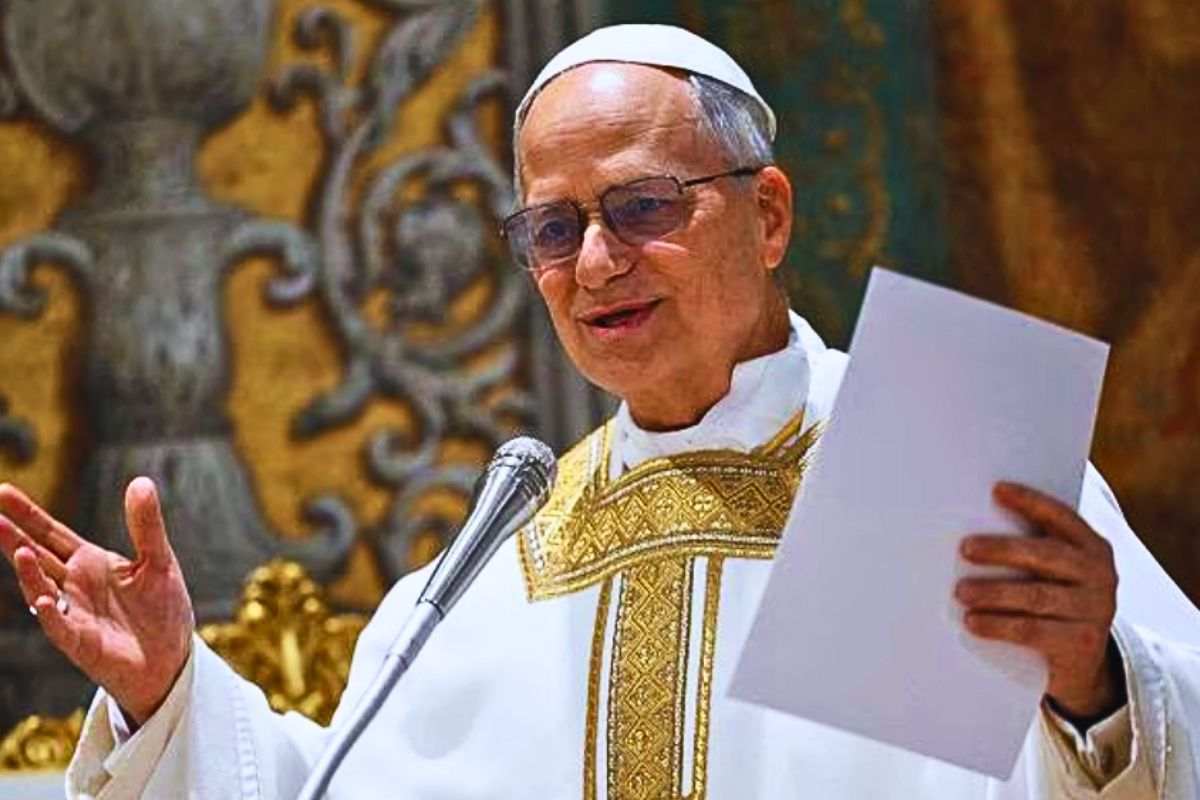 The news that Leo XIV will not require any additional treatment for his adenocarcinoma reached journalists late on the evening of October 20th, confirming all expectations.
After the removal of a lung lobe, Leo XIV is ready to return to the scene and has already resumed regular activities, including private and general audiences, looking forward with confidence to his trip to Argentina, Peru, and Uruguay.
If all continues to go well, and there is every reason to believe it will, health-wise, the lung surgery was just a parenthesis, while the pontificate now prepares to face its most complex season.
As always happens in complex seasons, rumors and gossip multiply.
Between now and February, the pontiff will have to appoint new prefects for of the Dicasteries for the Laity, Family and Life, Causes of Saints, Promotion of Christian Unity, Divine Worship, and Clergy.
(Clergy is somewhat less urgent, since Cardinal You, who heads it, turns 75 this November and his term could be extended.)
The cardinals leading the other dicasteries have long since passed retirement age: Farrell is 79, Semeraro 78, Koch 76, Roche 76. Changing the major department heads in short order represents a significant change of guard, and his picks for their successors will be very telling.
There are several issues to consider.
The first is the need for a “liturgical peace.” Cardinal Roche was the most active “enforcer” of Traditionis custodes, the Francis-era motu proprio that erased Benedict XVI’s liberalizing reforms that allowed wide use of the preconciliar books for the celebration of Mass and other sacraments and rites. Even today, at the end of his mandate, Roche has not failed to defend Traditionis custodes and enforce it, sometimes using harsh terms against those who prefer the traditional rite.
Roche’s second-in-command at DDW was Archbishop Vittorio Francesco Viola, considered another enemy of tradition though in reality a celebrant with a rigorous, albeit neo-conciliar ars celebrandi. Viola has now been promoted to archpriest of St. Peter’s Basilica and, at least for the time being, replaced in DDW by the undersecretary of the dicastery, while Roche will retire.
Leo’s choice of a man to lead the rites dicastery will speak volumes about how he intends to address the liturgical issue.
Since his election, Leo XIV has not ordered any radical departure from the course set by Francis. Leo has avoided enforcing policy with all the rigor countenanced by the letter of the law, and he has occasionally relaxed restrictions. At the beginning of the Leonine pontificate, the nuncio to England, Archbishop Maury, had made it known that permissions to celebrate with the ancient rite would be granted when requested. Participants in the 2025 Paris-Chartres pilgrimage also said they received a message from the Pope, a gesture of genuine solicitude to a substantial body of the faithful devoted to traditional worship.
Overall, Leo XIV doesn’t seem to want to overturn his predecessor’s decisions, but neither does he want to create or perpetuate unnecessary tension.
The profile of the new DDW prefect is being discussed as that of an outsider, a cardinal or archbishop not from the curia, someone who can take a balanced approach. In essence, this marks the end of the Cardinal Roche era and a move toward greater balance between the demands of traditionalists and those of the new rite.
The future of the Dicastery for Laity, Family, and Life is more difficult to define, especially since Cardinal Farrell, who enjoys the full confidence of Leo XIV, is also the Camerlengo. Here, too, since the dicastery’s number two is a layperson, an appointment from outside is expected, perhaps someone not in the public eye.
But a second theme concerns possible spoilers.
Francis was known to preach the “God of surprises” and ruled as though being such a God’s vicar on Earth meant offering surprises of one’s own, and part of Leo XIV’s mandate is to bring a measure of stability to the government of the Church. That said, Leo has shown himself capable of surprising decisions, too. In some ways, his pontificate has rendered speculation pointless. Furthermore, so far it’s impossible to define a group of people truly close to the Pope: it’s unclear who helps him make decisions and from whom he gets his information.
This differs substantially from the previous pontificate.
Pope Francis made extensive use of so-called “informal advisors” and it was precisely they who spread information and gossip that sometimes allowed the pontificate’s next moves to be anticipated, and other times created even greater confusion.
Leo XIV does not use informal advisors, at least not in the way Francis did. If Francis’s pontificate was an informal one, defined precisely by the rejection of protocol and tradition, asymmetrical appointments (for example, there is still a Dicastery for Evangelization with two pro-prefects, one cardinal and one archbishop), and the decision not to reward positions as traditionally occurred, Leo XIV’s pontificate is a more formal one.
Pope Francis initiated the synodal process (and eventually opened it to non-bishops as well), Leo XIV reinstated the practice of holding regular “business” consistories for the cardinals. Pope Francis eschewed certain symbols, such as the mozzetta, but Leo XIV has brought the mozzetta back (and a few others, as well). Pope Francis systematically avoided traveling to European countries with long Christian traditions. Leo XIV began with those. Pope Francis never returned to Argentina. Leo XIV will return to Argentina, because it is right to pay homage to the nation of his predecessor.
Leo XIV demonstrates respect for symbols, protocol, and tradition. He does so, however, without destroying the legacy of Pope Francis. The synodal process continues, the working groups publish their observations, and even the meeting on Amoris Laetitia, which ended without the Pope – who was hospitalized – has a final document (though it has not been published because the Pope wishes to see it first).
The third theme is to understand what Leo XIV’s “formal Papacy” entails.
In the coming months, several important dioceses will need to appoint a new archbishop: Barcelona, Paris, and Milan, where the term is already extended, and, starting next year, Esztergom-Budapest, since Cardinal Ërdo will turn 75 and is already ill. In London, Leo XIV has chosen Richard Moth, a conservative figure little known outside the island. In Prague, Stanislav Přibyl has been chosen, a figure similar to Moth’s. It is unknown whether the same will happen in other major cities.
Above all, it’s unknown whether Leo XIV will once again reward these cities’ archbishops with the red hat.
The fourth theme concerns government choices.
The Secretary of State, Cardinal Pietro Parolin, will turn 72 in January. He has three full years until he reaches retirement age and is generally held in high esteem by chanceries worldwide. He is not a rival to the Pope, and it is probably unfair to describe him as disappointed that he did not become pontiff.
However, his statements during the Pope’s hospitalization were poorly received and considered rather imprudent.
Parolin spoke – rather hastily, it is more than fair to say – of a “remodulation” of the pontificate in the wake of the Pope’s cancer diagnosis. Leo was still in the hospital, and there was no word on whether he would need further treatment. On the other hand, it is also fair to note that Parolin is a cancer survivor himself and – though a well-trained and careful diplomat – appeared to walk his statement back even while he was making it.
This could still be the moment when the Pope decides to form a new government team, and Parolin could be offered the role of Grand Master of the Equestrian Order of the Holy Sepulchre.
Once the boxes are filled, a consistory will likely create cardinals. Perhaps that consistory will be the moment that Leo XIV’s pontificate will truly begin.
Condividi


3 Responses to Leo XIV: Everything is as it was?
Lascia un Commento
Get in touch



Notwithstanding multiple contentious observations in the article, such as:
the need for a “liturgical peace”
or
Overall, Leo XIV doesn’t seem to want to overturn his predecessor’s decisions, but neither does he want to create or perpetuate unnecessary tension
or
Cardinal Farrell, who enjoys the full confidence of Leo XIV
to quote but a few; I will only comment on the final sentence above:
Perhaps that consistory will be the moment that Leo XIV’s pontificate will truly begin
All told, this sentence leads to the inevitable conclusion that, currently, in the opinion of this Vaticanista, after almost 18 months in the Chair of Peter, Leo remains ‘the Pope who never was.’
Notwithstanding the Papal Almoner, Leo moves very slowly. I would not expect a replacement for Cardinal Farrell until very close to, if not on, his 80th birthday, and the same regarding Semeraro. I would not be surprised either way with Roche. Leo has heretofore seemed to be onside with Roche,but with Roche causing a ruckus and his term being up, I also would not be surprised if he were to retire soon. I still think it probable that Parolin may stay on at least until 75.
[...] Monday Vatican) Vota:Condividi:TweetAltroCondividi su Tumblr Condividi su WhatsApp (Si apre in una nuova finestra) [...]