MondayVatican
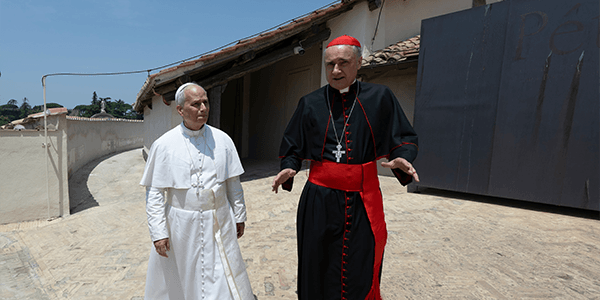 The appointment of Cardinal Mauro Gambetti as Archbishop of Chieti-Vasto represents the first real personnel change of Leo XIV’s pontificate.
Gambetti became Archpriest of St. Peter’s Basilica in 2021 and has completed his five-year term. He could have been reappointed. He could have been assigned to another position in the Vatican, but he hasn’t.
He is being sent to lead the Archdiocese of Chieti-Vasto, a minor diocese until now led by Archbishop Bruno Forte.
It’s ironic to think that Archbishop Forte seemed, at the beginning of Pope Francis’s pontificate, a rising star, special secretary of the Synod on the Family and author, among other things, of a controversial text during the 2014 synod session that opened the door to welcoming homosexuals.
Forte represented the synod according to Pope Francis, and twelve years ago, a brilliant career was envisioned, with a cardinalate just around the corner. Forte, however, was also reckless enough to reveal behind-the-scenes details of the Synod that, among other things, highlighted a certain cunning on the part of Pope Francis. So he remained in Chieti-Vasto, no longer holding any leading roles, at the age of 77.
Taking his place is one of the cardinals who, more than any other, has embodied the modus gubernandi of Pope Francis. Gambetti was created a cardinal in the 2020 consistory, but held no office until February 2021, when he became archpriest of St. Peter’s Basilica, replacing Cardinal Angelo Comastri.
Under Gambetti, St. Peter’s Basilica stopped hosting multiple Masses. Instead, concelebration of communal Masses was encouraged. Access to the Basilica was divided between pilgrims and tourists. Various consultants were hired, including those from the Fabbrica di San Pietro, creating disparities in treatment and work.
After five years as archpriest of St. Peter’s Basilica, and six as a cardinal, it was fairly obvious that Cardinal Gambetti would be appointed to a new post, though it was anything but given that he would go to lead a peripheral diocese in central Italy, one without much influence even within the Italian Episcopal Conference.
It is an assignment that does not feel like a promotion, even if it doesn’t look exactly like a punishment.
Gambetti’s appointment to Chieti-Vasto was announced on October 3, but on October 2, he convened the Chapter of St. Peter’s at 8:00 a.m. to announce it. This was an unusual gesture, demonstrating that very little of Cardinal Gambetti’s tenure was truly ordinary.
Leo XIV also called a meeting of the Chapter and members of the Fabric of St. Peter for 12 noon on November 30. This too is unusual and perhaps heralds new appointments or a new structure for St. Peter’s Basilica and its Fabric, with all its patrimony. It is however striking that the Pope did not appoint immediately Gambetti’s successor as Archpriest of the St. Peter’s Basilica.
It seems that, before naming a successor, the Pope wants the finances of the Basilica, the Chapter and the Fabrica to go under scrutiny, as it is rumored that the Basilica, Chapter and Fabrica are now in financial distress, and it is also rumored that 22 million were lost in only five years.
Concerning the new archpriest and Vicar of the Pope for the Vatican City State, Bishop Corrado Sanguinetti of Pavia is rumored as a possible pick, along with the former Master of Ceremonies, Bishop Guido Marini, now leading the diocese of Tortona. However, the appointment will take time.
Leo XIV thus embarks on reform of one of the most controversial administrations of the final years of Francis’s pontificate. Gambetti’s succession marks the beginning of a new chapter and, likely, a turning point in the Leonine pontificate.
The Pope must consider replacing several heads of dicasteries who are over 75 and approaching retirement age.
One of the key dicasteries is the Dicastery of Divine Worship, led by Cardinal Arthur Roche, now 77. As secretary and then prefect of the Dicastery, Roche strengthened and supported Pope Francis’s “battle” against the traditionalist world. His replacement, and who will take his place, also has ideological weight. His deputy is Archbishop Vittorio Viola, another considered an enemy of liturgical tradition, although in the diocese of Tortona, where he came from, he distinguished himself with particular attention to the liturgy.
Both Roche and Viola are rumored to be leaving.
Roche could be replaced by Archbishop Ravelli, currently Master of Papal Ceremonies, but this candidacy appears to have failed to warm hearts. Ravelli, however, is invariably among those earmarked for a new post, as Leo XIV may want another master of ceremonies alongside him. Perhaps he is more likely to be appointed secretary of the dicastery, while Archbishop Viola seems destined for promotion to cardinalate, namely, prefect of the Dicastery for the Causes of Saints. The current prefect, Cardinal Marcello Semeraro, is 78 and will soon retire.
It’s unclear who the new prefect of liturgy will be, and Leo XIV has been very good at shuffling the deck so far. The prefects Leo has chosen so far are of two types: the clergy are generally hardworking, modest, and not necessarily charismatic, but recognized as honest; the lay people have so far been all women, from Sister Alessandra Smerilli to Maria Montserrat Alvarado, who will begin her post as prefect of the Dicastery for Communication in November.
Will the new prefect finally usher in liturgical peace?
It’s hoped, given that the rift between the traditionalist world and the Holy See is now more open than ever, following the schism of the Lefebvrians who consecrated new bishops without papal mandate.
Certainly, the Lefebvrian question deserved further consideration, and the Decree of the Dicastery for the Doctrine of the Faith presents several problems, as it even declares null the sacraments of confession and marriage administered by members of the Priestly Society of Saint Pius X.
SSPX priests could validly hear Confessions and absolve penitents under some existing exceptions and under an explicit Francis-era permission, but marriage is different. The ministers of the sacrament are the spouses themselves, and clerics merely receive the spouses’ vows for the Church. It is a complicated business, and the DDF decree arguably did not do justice to all the complexity.
In any case, there is no talk, however, of a change at the top of the Dicastery for the Doctrine of the Faith, where Cardinal Victor Manuel Fernández still has two years left in his mandate. Leo XIV does not appear to want to implement a radical spoils system, but rather to act when the terms of the appointments of the previous pontificate expire.
One exception to this reasoning concerns the Secretariat of State.
Rumors suggest that Cardinal Pietro Parolin is ready to step down to become Grand Master of the Equestrian Order of the Holy Sepulcher. Parolin will turn 72 next January, with three years left until his retirement, but he has served as Secretary of State for more than two five-year terms. These are, however, just rumors. For now, Cardinal Parolin seems firmly in place.
Gambetti’s departure, however, marks the moment when Leo XIV begins to assemble his team and put his own personal stamp on the pontificate. Pope Francis left many issues unresolved, and for now, Leo XIV has focused primarily on ecclesiastical matters. On the economic front, he has favored continuity, both in appointing Cardinal Reinhard Marx to a third term as president of the Council for the Economy and in appointing François Pauly as president of the Board of Superintendence of the IOR after de Franssu. For ecclesiastical ministries, he has maintained a low profile, seeking normality. For the more operational ministries, such as communications, he has sought more operational and managerial profiles.
These trends don’t fully reflect the character of the pontificate, but only reveal a Pope who is trying to make prudent decisions.
He’s not Francis 2.0 or a second Francis. This is a Pope with his own characteristics, who has nothing against the previous pontificate, but who is nevertheless seeking his own dimension in governing the Church. He can’t be defined as progressive or conservative. He is, simply, Leo. It’s a personal synthesis that will include actions such as removing the archpriest of St. Peter’s Basilica, or inaction in other situations.
It’s not surprising. It’s just a slow transition.
Condividi


One Response to Leo XIV: The beginning of the transition
Lascia un Commento
Get in touch



Cardinal Parolin is 71, born in 1955. Exactly like the Holy Father.
Gallagher is 72, born in 1954.